Wood Color Jam - Block Puzzle
- 4.9
- Rating
- 1.00M
- Installs
- Free
- Price
 Analysis by App-foxy
My first few minutes with Wood Color Jam - Block Puzzle were pleasantly simple: I placed wooden-looking colored blocks, watched the board clear, and immediately understood the basic goal. That ease is important here. This is a free puzzle game from LolTap, rated for Everyone, and its appeal comes from making a familiar block format feel calm rather than demanding. I did not need a long tutorial or a complicated rulebook before starting a round.
The game sits in a comfortable space between a traditional block puzzle and a short relaxation break. Its store summary describes an experience that is easy to begin but difficult to put down, and that matches my hands-on impression more closely than a dramatic, high-pressure puzzle label would. The challenge grows from deciding where each piece belongs, not from learning a large collection of systems. For me, that made it a natural choice when I wanted something active enough to hold my attention but quiet enough to play without preparing for a serious session.
It is worth knowing what kind of commitment this creates. A round can feel like a small mental reset, but the open-ended nature of block placement can also encourage “just one more” attempts. Players who enjoy gradual board management will probably settle into it quickly. Those who want a defined story, a campaign with characters, or a clear final stage may find the deliberately modest structure less satisfying.
You May Also Like

 Blood Strike: 2.5 Anniversary
Blood Strike’s Loadouts Turn Every Drop Into a Tactical Gamble
A close look at Blood Strike’s custom loadouts: how fast access to signature weapons reshapes its battle royale rhythm, rewards preparation, and narrows the gap between fights.

 Pandora - Music & Podcasts
Pandora’s Music Is Easy to Start, but Harder to Recover
Pandora’s strength is its low-effort path from a seed to a station. Its weak spot is how much confidence it asks you to place in connection, setup, and quiet recovery.

 8 Ball Pool
 Is Built on Rivalries, Rematches, and Routine
A close look at the rivalries, rematches, shared routines, and unanswered safety questions that turn a quick pool match into a persistent mobile community.

 Samsung Music
’s Quiet Strength Is Playing What You Already Own
Its reach comes less from spectacle than from dependable access to a personal library. That simplicity is both the app’s strongest retention engine and its ceiling.

 AccuWeather: Weather Radar
AccuWeather Review: A Quick, Clear Forecast for Everyday Decisions
For everyday plans, the best forecast is the one you can understand quickly. AccuWeather makes rain timing, radar, and local conditions easy to act on, with a few trade-offs.

 Hill Climb Racing
Why Hill Climb Racing Still Turns Crashes Into One More Run
A tiny car, a bumpy hill and one more upgrade: Hill Climb Racing keeps resurfacing because its simple chaos makes every near-miss feel personal.
More From Our News Desk
View All News


A gentle visual language built around wood and color
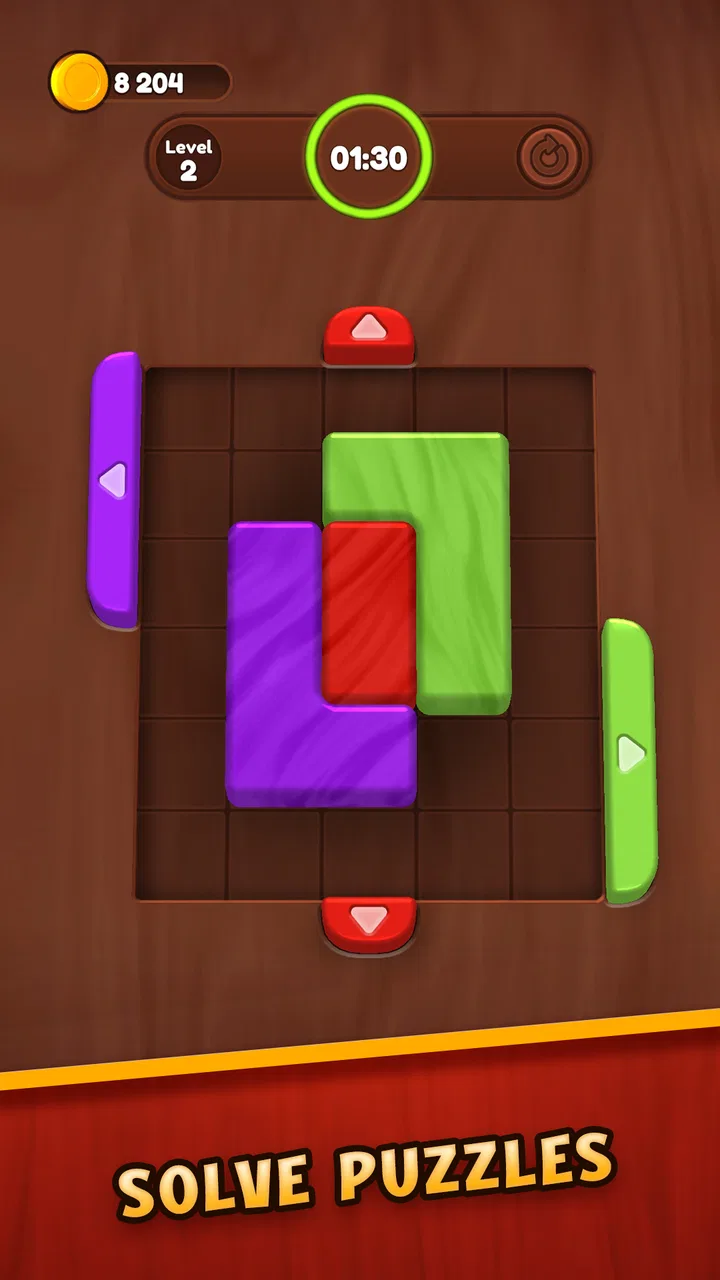
The central visual idea is clear from the name: colored blocks are presented with a wooden character. That choice gives the board a warmer identity than a purely flat collection of bright tiles. In my experience, the wood-like presentation helps the game feel closer to a tabletop pastime than to a frantic arcade challenge. The colors do the practical work of separating pieces, while the material styling gives the overall screen a more settled personality.
This is not a game that needs a large fictional world to justify its setting. Its “world” is the board itself, and the consistency of the blocks creates the mood. I appreciated that the visual direction supports the puzzle instead of competing with it. There is no need to stop and interpret a busy scene before making a move. I can look at the available shapes, compare them with the open spaces, and think about the next placement without losing the thread.
That restraint also reveals a limitation. If you usually choose puzzle games for elaborate backgrounds, animated characters, or a strong narrative theme, the presentation may feel sparse. The wooden style gives the game coherence, but it does not transform a straightforward block board into a story-driven adventure. I would recommend it for visual calm and clarity, not for spectacle.
The color treatment matters more than it might seem. Block puzzles depend on quick recognition, especially when the board begins to fill. I found myself reading the pieces by both shape and color, which is useful when several placements look possible. A practical tip is to avoid focusing only on the most obvious matching color. The better move is often the one that preserves a broad empty area for awkward shapes later, even if it does not produce the most immediately satisfying placement.
That habit becomes especially useful during distracted play. If I am waiting for an appointment or taking a short break between tasks, I can return to the board and reconstruct the situation from the visible arrangement. The consistent art direction helps because the game does not bury the relevant information under decorative clutter. It feels designed for quick visual reading, even when the decision itself takes longer.
Why the setting works best as a pause, not a destination
The wooden presentation gives the game a relaxed identity, but it is also a reminder of its limits. There is no strong sense of place to explore beyond the puzzle space. I would not open it expecting the emotional variety of a narrative puzzle game or the changing environments of a level-based mobile adventure. Instead, I see it as a portable activity with a recognizable visual surface.
That distinction helps set expectations. The setting works when I want a stable backdrop that lets me concentrate. It works less well when I want discovery. The game’s personality comes from texture, color, and the act of arranging pieces, so anyone looking for lore or a sequence of dramatic events should choose a different type of puzzle experience.
Sound, pacing, and the feeling of a controlled rhythm
The strongest mood comes from the relationship between the visual style and the pace of play. Because the decisions are made one placement at a time, the game naturally creates a measured rhythm. I can pause over a nearly full board, consider several options, and continue without feeling that I have missed a fast-moving event. That makes it easy to fit into ordinary moments when I want a little focus without a demanding time limit.
I found this pacing more important than any individual block. A good placement produces a small sense of order, while a poor one can make the remaining space feel uncomfortable. The game therefore creates tension through accumulation rather than speed. The longer I leave awkward gaps, the more carefully I have to think. This is a quiet form of pressure, but it is enough to keep the session engaging.
The sound design should be judged in that same context. This is not an experience I would choose for a dramatic soundtrack or a constantly changing musical score. Its mood depends on keeping the audio from overwhelming the simple act of placing blocks. For me, the restrained feel suits the wooden visual language. The game is easier to treat as background relaxation when the sound remains subordinate to the board.
There is a useful everyday scenario here. I can imagine opening it on a train, playing a few moves while standing, then putting the phone away when my stop arrives. I do not need to remember a complicated plot or reach a checkpoint before leaving. When I return, the current board provides the context. That flexibility is one of the game’s real strengths, especially for players who prefer short sessions rather than a single uninterrupted sitting.
At the same time, the calm pacing can become repetitive. Players who need frequent surprises may interpret the steady rhythm as a lack of variety. I also would not use it as my main choice when I want an intense competitive test. The game’s appeal is the gradual pressure of arranging a board, not the rush of beating another player or surviving a fast sequence.
How to use the rhythm instead of fighting it
My best approach is to treat each move as a planning step rather than immediately chasing a clear. Before placing a block, I look at the largest open region and the shapes that would be hardest to accommodate later. This slows the session slightly, but it makes the board feel more readable and reduces the frustration of filling a useful space too early.
I also find that the game suits a “reset window” better than a long marathon. A short session after work can give my attention one simple problem to solve. If I continue after the board stops feeling relaxing, the same repetition that first felt soothing can start to feel mechanical. Knowing when to stop is part of getting the best experience from this kind of design.
Simple mechanics with more planning than the first move suggests
At its core, this is a puzzle about placing wood-styled colored blocks on a board and managing the space they occupy. That simplicity is a genuine advantage. I can understand the interaction almost immediately, and the game does not ask me to memorize a complicated control scheme. The challenge comes from anticipating how the current placement affects future options.
The important trade-off is between short-term satisfaction and long-term flexibility. Clearing space feels useful, but not every available clear is equally valuable. Sometimes I prefer to preserve a central area and place a less convenient piece along an edge. That decision may look less rewarding in the moment, yet it gives me more room to handle the next awkward shape. This is where the game becomes more thoughtful than its first impression suggests.
A second useful insight is to protect open corners and avoid creating narrow pockets unless a future piece can realistically use them. Small gaps can become traps because they reduce the number of shapes that fit comfortably. When I notice that the board is developing several isolated spaces, I stop thinking about immediate color matches and start thinking about overall geometry. The wooden color theme makes the pieces approachable, but the real skill is spatial forecasting.
A third tip is to make decisions based on the board’s remaining flexibility, not just the piece currently in my hand. If one placement leaves several broad areas open while another creates a neat but restrictive pattern, I usually choose the broader option. This is particularly helpful when I am playing casually and do not want the board to collapse after a few careless moves.
The mechanics are a good fit for touchscreens because the action is direct and visually legible. There is no need for a virtual joystick or a complex gesture vocabulary. That makes the game accessible to people who are not regular mobile players. It also means that the depth must come from the puzzle itself. If you want a wide range of abilities, elaborate modifiers, or a large strategic system, this focused format may feel too narrow.
Another question many players have is whether the game is suitable for children or shared family use. Its Everyone age rating and straightforward block concept make it approachable for a broad audience. I would still describe the later challenge as something that rewards patience rather than reflexes. A child may understand the placement quickly, while an experienced puzzle player may be better at preserving space and recognizing future problems.
Where it differs from familiar block-puzzle alternatives
Compared with classic falling-block games, this experience feels less frantic because the emphasis is on deliberate placement rather than reacting to pieces descending in real time. That makes it a better fit for a quiet break and a weaker fit for someone who enjoys speed, combos, and immediate pressure. Compared with match-three games, it asks me to think more about shape and board geometry than about spotting a chain of identical symbols.
It also differs from story-based puzzle adventures. Those games often reward progress with dialogue, scenes, or new locations. Here, the reward is more internal: a clean board, a clever placement, or the relief of recovering from a crowded position. I prefer this when I want the puzzle to remain the main event. I would choose another option when a sense of progression outside the board is the reason I am playing.
The free price makes it easy to try without an upfront purchase. There are in-app purchases ranging from $0.99 to $99.99 per item, so I would pay attention to the purchase flow and keep spending controls in mind, particularly on a shared device. The free entry point is attractive, but “free to start” is not the same as “free of every possible spending prompt.” That is a practical consideration for parents and for anyone who prefers a completely frictionless casual game.
The game has reached over a million installs and holds a 4.9 average from around 90 thousand ratings, with roughly 1.8 thousand written reviews. Those figures suggest that the simple formula has connected with a large audience, but they should not replace personal taste. A high average cannot make a calm block puzzle feel exciting to someone who needs constant novelty. For the right player, though, the broad response makes sense: the rules are approachable, the visual identity is easy to recognize, and the sessions can fit around daily life.
Who should play it and who should look elsewhere
I would recommend this game to anyone who likes tidy visual design, gradual decision-making, and puzzle sessions that can begin without preparation. It is especially suitable for commuters, casual players, and people who want a small concentration exercise during a break. The wood-inspired presentation adds warmth, while the color-coded blocks keep the board understandable.
I would be more cautious about recommending it to players who need a campaign, character development, competitive ranking, or a strong sense of discovery. The game’s narrow focus is part of its charm, but it also defines its ceiling. If you play for an hour expecting the experience to keep introducing new concepts, the steady structure may begin to feel limited.
Device compatibility is broad enough for older supported hardware, since the minimum operating system is Android 7.1. The current version is 1.6.25, which is useful to know when checking whether a device can run the available release. I would still judge the experience on the phone or tablet I plan to use, because the comfort of seeing the board clearly matters more here than raw performance.
For a first session, I suggest playing slowly rather than trying to maximize every early move. Learn how the board fills, notice which spaces become difficult to use, and resist the temptation to place a piece simply because it fits. After that, use the game’s calm pacing to develop a repeatable habit: inspect the largest open area, consider the least flexible piece, then choose the placement that leaves the board easiest to read.
That workflow also answers whether the game is relaxing or stressful: it can be either, depending on how it is approached. If I treat each board as a problem I must solve perfectly, the limited space creates pressure. If I use it as a short exercise in making the best available choice, the same design becomes soothing. The art direction and pacing encourage the second approach, but the player still controls the mood.
A coherent mood with a deliberately focused puzzle loop
My final impression is that Wood Color Jam - Block Puzzle succeeds because its presentation and mechanics point in the same direction. The wooden look makes the board feel warm and tactile, the colors keep the pieces readable, and the measured rhythm gives each placement room to matter. Nothing about the style promises an adventure that the mechanics cannot deliver. Instead, the game stays focused on arranging space and enjoying the small satisfaction of order.
I like that honesty. The experience does not need a complicated setting to make a board puzzle worthwhile, and its restrained mood makes it easy to return to during ordinary gaps in the day. The main weaknesses are equally clear: the format can become repetitive, the visual world is intentionally limited, and players seeking fast action or narrative progress will probably be happier elsewhere.
For me, the deciding question is simple: do you want a colorful block puzzle that feels like a quiet tabletop break, or do you want a constantly changing mobile game? If the first description sounds appealing, this free release from LolTap is an easy one to try. Its best quality is the fit between atmosphere and play: calm enough to unwind, but structured enough to keep my mind engaged.
I would keep it installed for short sessions rather than make it my only puzzle game. Used that way, it fills a specific role very well. It gives me a clear board, a few meaningful decisions, and a warm visual mood without demanding a large time commitment. That focused identity is not for everyone, but for players who enjoy thoughtful block placement and gentle pacing, it is exactly what makes the game worth returning to.
FAQs for Wood Color Jam - Block Puzzle
01What is Wood Color Jam - Block Puzzle?
Wood Color Jam - Block Puzzle is a casual puzzle game centered on arranging and matching wooden-colored blocks. The main objective is to place pieces strategically, clear groups or complete required patterns, and progress through increasingly challenging levels. Its simple controls make it easy to start, while limited space and more complex layouts gradually require better planning and patience.
02How do you play Wood Color Jam - Block Puzzle?
Gameplay is generally based on selecting, moving, and positioning wooden blocks on a board so that matching colors or shapes can be combined or cleared. Before making a move, it is useful to consider how each placement affects the remaining space. Avoid filling the board too quickly, look for chain reactions, and prioritize moves that create new opportunities rather than solving only the most obvious match.
03Is Wood Color Jam - Block Puzzle free to download and play?
The game can typically be downloaded for free, allowing players to try its core puzzle mechanics without an upfront purchase. However, free puzzle games may include advertisements, optional in-app purchases, extra moves, boosters, or other convenience features. Availability and pricing can differ between Android and iOS, so it is worth checking the store listing and purchase settings before downloading.
04Does Wood Color Jam - Block Puzzle require an internet connection?
Many of the basic levels in Wood Color Jam - Block Puzzle may be playable offline, which makes the game convenient for short sessions while traveling or when mobile data is unavailable. Nevertheless, an internet connection may be needed for advertisements, cloud synchronization, updates, daily challenges, rewards, or purchases. Offline functionality can also vary depending on the installed version and device.
05Is Wood Color Jam - Block Puzzle suitable for children and casual players?
Wood Color Jam - Block Puzzle is suitable for players who enjoy relaxed, easy-to-understand puzzle games and short sessions. The controls are usually simple enough for beginners, but later stages can demand concentration and forward planning. Parents should still review the app’s age rating, advertising, privacy information, and optional purchases, particularly if children will play on a shared device.
Pros
- Easy-to-learn rules make it suitable for quick sessions.
- Colorful wooden visuals are pleasant and easy to follow.
- Gradually increasing difficulty keeps the puzzles engaging.
- Works well for relaxing play without requiring fast reactions.
- Simple controls are comfortable on both phones and tablets.
Cons
- Some levels may feel repetitive after extended play.
- Later puzzles can depend heavily on finding the correct move order.
- Hints or extra moves may be limited without watching ads.
- The game offers less variety than more feature-rich puzzle titles.
- Progress may feel slow for players seeking constant new challenges.

Wood Color Jam - Block Puzzle
Gallery